09 430 3406
 administrator@tiaho.org.nz
There are some things that are said in the political circus that make you roll your eyes. There are others that make you feel acutely nauseated.
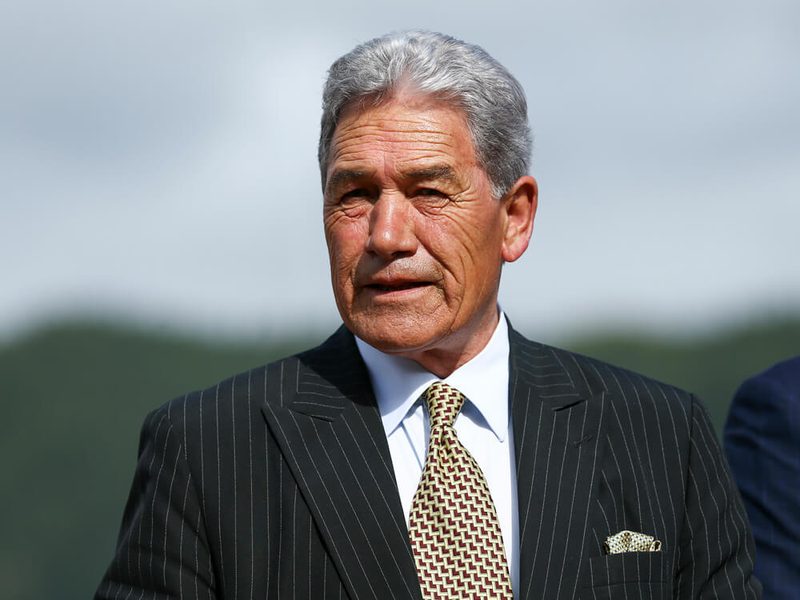
On Tuesday 28 July, Winston Peters described the Green Party as “appallingly retarded” while attacking its proposal for a one year moratorium on new data centre consenting.
Those weren’t words attributed to him by an opponent or taken out of context. They were his words.
And when a reporter subsequently asked Peters whether “retarded” was a word he should be using, he was handed a very generous off ramp.
He could have taken it back.
He could have acknowledged that the word is offensive to people with intellectual disabilities, in fact all people with disabilities.
He could have said he’d chosen the wrong word.
He didn’t.
He doubled down.
There was no apology.
And that, is more troubling than the original comment.
We all get things wrong. Politicians are human. Words sometimes come out before the brain has had time to apply the brakes.
But when someone stops you and says, essentially, “Are you sure you should be saying that?”, you get a choice.
You can listen.
Or you can carry on.
Peters carried on.
What troubles me almost as much is what happened afterwards, or rather what didn’t happen.
I could find the Stuff report about Peters’ comments, but remarkably little other media coverage. There was no great television news storm, no prolonged political discussion and no widespread examination of why a senior Cabinet minister using an ableist slur might matter.
Compare that with what happened the following day.
Peters told Green MP Lawrence Xu-Nan, who was born in China but has lived in New Zealand since 1994, to “go back to your own country” and called him a “loudmouth”.
That generated widespread coverage, including international reporting and a diplomatic response from China.
And rightly so.
But why the enormous difference?
Why does racism attract immediate and sustained scrutiny while an insult directed at people with disabilities can apparently disappear into the news cycle?
Maybe because we still haven’t quite accepted that disability discrimination is discrimination.
“Retarded” isn’t simply an old-fashioned synonym for stupid.
It has a history.
It has been used to describe people with intellectual disabilities as lesser, defective, incapable and worthy of ridicule. Not just intellectual disabilities ether. I know from experience.
I have a particularly unpleasant memory from 30 years ago at Roger’s a good friend of mine, at his house on a cliff of the stunning Tutukaka Coast.
At some point, a newcomer apparently unaware of who was around her casually asked someone who had bought “the retard” nodding at me.
Obviously, it was because I had Cerebral Palsy.
I still remember the repugnance of it.
Not because I hadn’t heard the word before.
It was the casualness.
That is how prejudice often survives. Not through dramatic declarations of hatred, but through casual language that everyone is expected to ignore.
For disabled people, those words don’t remain words.
They tell us what other people think we are worth.
And perhaps that’s why the lack of media coverage bothers me even more than Peters’ original comment.
We know what Winston Peters does.
He’s rather like the embarrassing great uncle at Christmas lunch who farts loudly, doesn’t understand why everyone has moved seats and then complains that everyone else has become too sensitive.
Eventually, though, somebody has to open a window.
The media should be that window.
Instead, “That’s just Winston” seems to have become an acceptable explanation.
It shouldn’t be.
Peters has been in politics long enough to know the power of words. He has been around long enough to know that language can wound, marginalise and dehumanise.
And he has already been down this particular road.
In 2024, Peters used “retard” in Parliament and was ordered by the Speaker to withdraw the word. IHC condemned his use of it.
Two years later, we are still having the same conversation.
Except we’re barely having it at all.
Political disagreement is healthy. Robust debate is essential. Calling another political party wrong, misguided or even stupid is part of democracy.
Using a slur historically directed at disabled people is something else.
And when you’re challenged on it and choose to double down, that tells us something about the speaker.
When the media barely reports it, that tells us something about the society listening.
Disabled people shouldn’t have to wait for the right insult to come along before our dignity is considered newsworthy.
If we genuinely believe that words matter, then we need to mean it consistently.
Not just when the target is someone whose race, ethnicity or nationality makes the prejudice easier to recognise.
Not just when the comment is politically useful.
All prejudice deserves scrutiny.
All marginalised communities deserve the same basic respect.
we should be able to expect the media to recognise that disability discrimination deserves the same scrutiny as other forms of prejudice.
Otherwise, we create a strange hierarchy of offensiveness where racism is recognised, sexism is recognised, but ableism can still be dismissed as another amusing episode in the political circus.
It isn’t amusing.
It isn’t harmless.
It shouldn’t be normalised.
It should be called out.
Jonny Wilkinson is the CEO of Tiaho Trust Disability A Matter of Perception, a Whangarei based disability advocacy organisation.
This article has been previously published in the Northern Advocate.