09 430 3406
 administrator@tiaho.org.nz
“Incoming, incoming!” Hit the trenches, people, the disability community in New Zealand is facing what feels like a coordinated wave of attacks! Not through one dramatic announcement, but through a steady erosion of support, representation, and inclusion.
Individually, each decision may be framed by the Government as “fiscal responsibility” or “restructuring.” But taken together, they paint a troubling picture of a country quietly pulling back from its commitments to disabled people.
The warning signs are everywhere.
There are the recent Lottery Grants Board reforms, which will disestablish specialist committees, including the Individuals with Disabilities Committee, and replace them with broader regional structures. In other words , the voice for disability focussed grants for items like mobility vans that are not funded anywhere else in the system will be silenced .
The recent report that Kāinga Ora has abandoned its targets to increase the number of accessible public homes should alarm every New Zealander who cares about inclusion. As reported by “The Post” , the Government has stepped away from expectations that a meaningful proportion of new public housing be designed for accessibility.
That decision might save money on paper. But in reality, it pushes costs and hardship onto disabled people and their families.
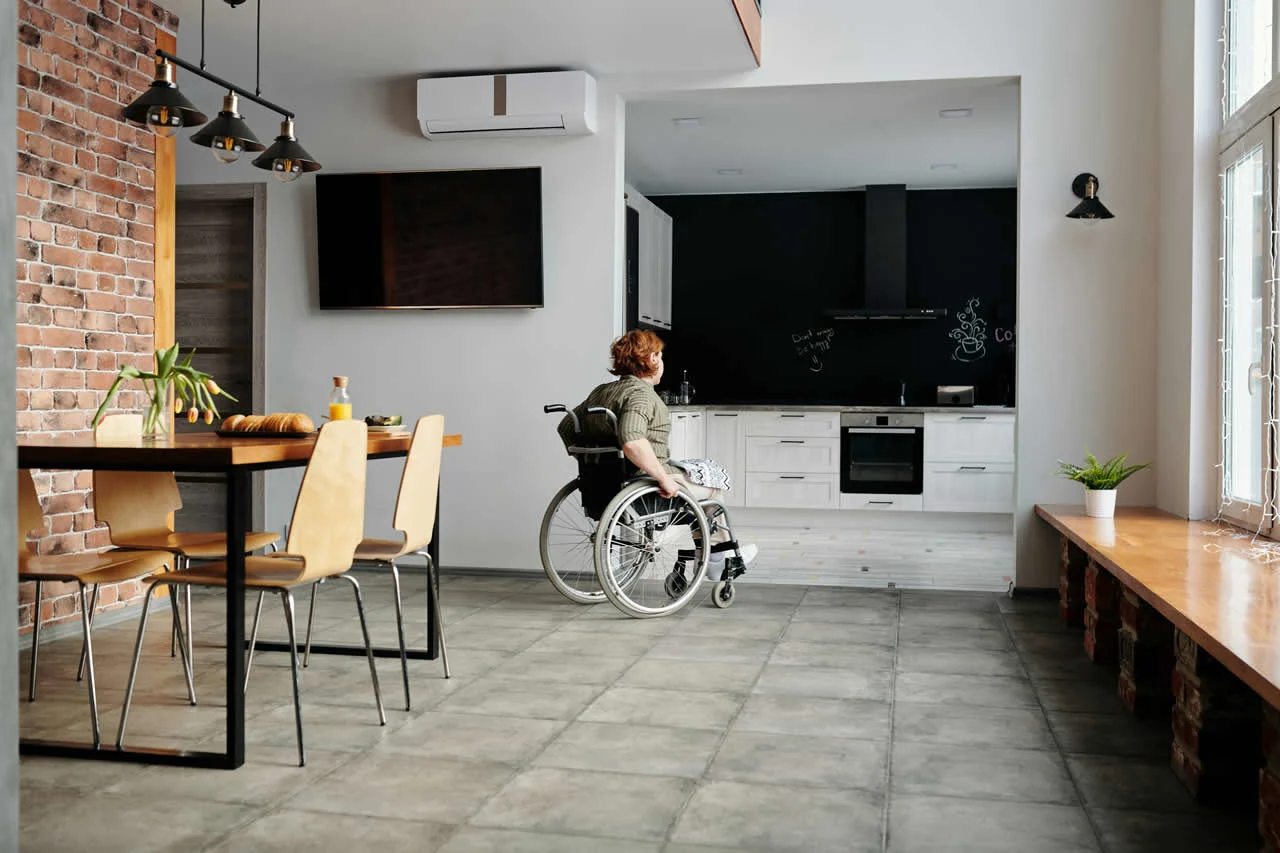
Accessible housing is not a luxury upgrade. It is basic infrastructure for participation in society. It’s a ramp not a set of stairs when you are in a wheelchair! Universal Design is a no brainer! It adds very little cost to the build and caters for everyone. In regions like Tai Tokerau, the impact is magnified.
Tai Tokerau already faces a severe shortage of accessible homes, limited rental stock, and long waiting lists. Outside Whangārei, further North, choices become even narrower.
That is the reality often missing from Wellington policy decisions.
The same disconnect appears in the Lottery Grants Board changes. Removing specialist disability committees may sound like administrative tidying, but it risks stripping away the very expertise needed to understand regional disability issues.
Tai Tokerau is not Auckland. Disability supports here operates in the context of rural isolation, poor public transport links, workforce shortages, and communities spread across vast geographic distances. Generic regional committees may understand governance, but will they understand that Disability Services are scarce outside of Whangarei. Will they recognise that many Northlanders rely on volunteer networks because formal services simply do not exist in some areas?
Specialist committees mattered because they understood disability as more than a budget line. They understood lived realities.
Transport provides another example. The ongoing pressures on the Total Mobility Scheme reveal how urban-centred many disability policies remain. In much of Tai Tokerau, there simply are not enough taxi operators for the system to function properly. A subsidy means little when no accessible vehicle exists to take the trip.
But instead of adapting schemes to support flexible, community led transport solutions, the subsidy rate on taxis is reduced.
The latest flashpoint is the proposed Disability Support Services Bill, described by one advocate in the media as “the worst piece of legislation I’ve ever seen.” The outrage surrounding the bill is not simply political theatre. It reflects deep fear within the disability community that the Government is attempting to reduce its obligations to disabled people and carers while limiting avenues for challenge and accountability.
For many families, this is not an abstract policy debate. It is daily survival.
One of the most persistent myths in disability policy is the idea that families “choose” to care for adult disabled relatives at home because it is preferable or culturally desirable. While love and commitment absolutely play a role, the uncomfortable reality is that many families do so because there are simply no suitable funded alternatives available.
Across New Zealand, and especially in regions like Tai Tokerau, residential options are either unavailable, inappropriate, or stretched beyond capacity. The shortage of disability support workers, accessible housing, respite care, and specialist residential services has left many families effectively trapped in unpaid caring roles for decades.
As journalist Sam Sachdeva reported in Newsroom on October 15, 2024, disabled New Zealanders were being “shut out of care” following the Government’s funding freeze, with some left stranded in hospitals or unsafe living situations because providers could not afford to take new placements. Sector leaders warned that uncertainty around funding was creating a “Catch-22” where services could neither expand nor safely support increasing need.
Parents in their seventies and eighties are still caring for adult sons and daughters with high support needs because there is nowhere else for them to go.
And increasingly, even when families reach breaking point, there are no appropriate alternatives.
That reality was laid bare in September 30, 2025 with a 1News investigation by Laura James, which highlighted the grim reality that hundreds of younger disabled New Zealanders are now living in rest homes because there are no suitable alternatives available.
Think about that for a moment.
Young disabled people are being placed into environments designed for the final years of life. Not because it is appropriate, but because there are no other options. Providers themselves acknowledged these facilities are not suitable for younger residents socially or emotionally, but they have become the default solution in a system running out of capacity.
What makes all of this especially frustrating is that disabled people have heard the language of inclusion for years. Governments speak about participation, accessibility, and equity. Strategies are launched. Consultations are held. Reports are written.
Yet increasingly, the practical decisions being made tell a different story.
New Zealand likes to see itself as fair and compassionate. But compassion is measured less by speeches and slogans than by budgets, policies, and priorities.
Right now, many disabled New Zealanders are looking at those priorities and wondering whether their place in society is quietly being downgraded.
This article was published in The Northern Advocate on May 23, 2026.